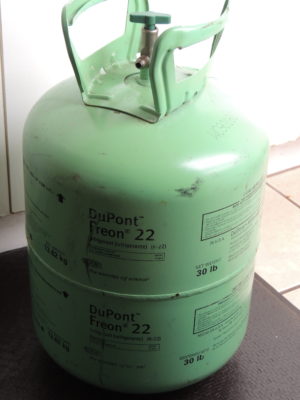
Is R-22 Freon Banned?
Is R-22 Freon banned? New production and import of R-22 for use in the United States ended in 2020. However, that does not mean an existing R-22 air conditioner or heat pump is illegal or that it can no longer be serviced.
R-22 is a hydrochlorofluorocarbon, or HCFC, refrigerant that HVAC manufacturers used in residential and commercial air-conditioning equipment for decades. Many people commonly refer to R-22 as Freon.
Because HCFC refrigerants contribute to ozone depletion, the United States phased out R-22 under the Clean Air Act and its obligations under the Montreal Protocol.
What Happened to R-22 Freon?
The R-22 phaseout happened gradually rather than through a single immediate ban.
- January 1, 2010: Manufacturers could no longer produce new air-conditioning and heat pump equipment designed to use newly produced R-22. Existing R-22 equipment could continue operating and receiving service.
- January 1, 2015: The United States reduced HCFC consumption substantially as part of the continuing phaseout.
- January 1, 2020: Production and import of new R-22 ended in the United States.
Existing R-22 air conditioners and heat pumps did not suddenly become illegal on January 1, 2020. They can continue to operate.
Can an Existing R-22 Air Conditioner Still Be Repaired?
Yes. Existing R-22 equipment can still be repaired and serviced.
The major difference is the source of the refrigerant. HVAC technicians can no longer rely on newly manufactured or newly imported R-22. Existing systems can instead use available supplies of previously produced, recovered, recycled, or reclaimed R-22.
This distinction matters because the phaseout applies primarily to the production and import of R-22. It does not require homeowners to remove an operating R-22 air-conditioning system simply because it uses R-22.
Why Was R-22 Phased Out?
R-22 contains chlorine. When released into the atmosphere, HCFC refrigerants can contribute to depletion of the stratospheric ozone layer.
The United States gradually reduced the production and consumption of HCFC refrigerants as part of its environmental commitments under the Montreal Protocol and requirements established through the Clean Air Act.
Is Reclaimed R-22 Still Available?
Yes. Reclaimed and previously produced R-22 can still be used to service existing equipment.
However, the supply is no longer replenished through normal production of new R-22. Availability and price can therefore become important considerations when an older R-22 system develops a refrigerant leak or requires a major repair.
Should You Repair or Replace an R-22 AC System?
An R-22 system does not automatically need replacement just because it uses R-22. The condition of the equipment should drive that decision.
Consider the age of the system, the type of failure, repair costs, refrigerant availability, efficiency, compressor condition, evaporator and condenser coil condition, and the expected remaining service life.
A minor electrical repair on an otherwise reliable R-22 system may still make financial sense. A major refrigerant leak, failed compressor, or leaking coil on an older system may make replacement a better investment.
Can You Convert an R-22 System to Another Refrigerant?
Alternative refrigerants exist for some R-22 applications, but replacing R-22 is not as simple as adding a different refrigerant to the system.
Refrigerants have different operating characteristics. A qualified HVAC technician must determine whether a retrofit refrigerant is appropriate for the specific equipment and what changes the system requires.
Never mix refrigerants or assume that another refrigerant can serve as a direct replacement for R-22.
What Does the R-22 Ban Mean for Homeowners?
The short answer is that you can continue using an existing R-22 air conditioner or heat pump.
If the system needs refrigerant, your HVAC contractor may still be able to service it with reclaimed or previously produced R-22. However, the cost of maintaining an aging R-22 system should become part of your repair-versus-replacement decision.
If your system still operates correctly, you do not need to replace it solely because it contains R-22. If it develops an expensive refrigerant-related failure, compare the complete repair cost against replacing the equipment with a system designed for a currently available refrigerant.
The Bottom Line on R-22 Freon
New R-22 production and import ended in the United States in 2020, but existing R-22 HVAC systems can continue operating and receiving service. Reclaimed, recycled, and previously produced refrigerant can remain available for servicing existing equipment.
Therefore, the question is no longer simply whether R-22 Freon is banned. If you own an R-22 system, the more useful question is whether repairing that specific system still makes financial sense compared with replacing it.