Ask The AC Expert

Answering all of your HVACR needs.

Category: Answers

  • Is Your Air Conditioner Overcharged or Undercharged with Refrigerant?

    Is Your Air Conditioner Overcharged or Undercharged with Refrigerant?

    Overcharged or Undercharged Air Conditioner

    If your overcharged or undercharged air conditioner is not cooling properly, you may have a refrigerant problem. Many homeowners notice weak airflow or higher energy bills when refrigerant levels are off.

    Refrigerant plays a key role in cooling your home. Therefore, too much or too little can reduce performance and damage your system. Let’s explore how to spot the problem and what it means.


    What Happens in an Overcharged or Undercharged Air Conditioner

    An overcharged or undercharged air conditioner cannot work efficiently. In both cases, the system struggles to transfer heat.

    As a result, your AC runs longer and uses more energy. In addition, parts like the compressor may wear out faster.

    Understanding the difference helps you fix the issue quickly.


    Signs of an Overcharged Air Conditioner

    High Pressure and Poor Cooling

    An overcharged unit contains too much refrigerant. This increases pressure inside the system.

    Because of this, the AC cannot cool properly. Your home may feel warm even when the unit runs.

    Higher Energy Bills

    When pressure rises, the system works harder. As a result, it uses more electricity.

    Therefore, you may notice a sudden increase in your energy bills.

    Strange Noises and Short Cycling

    Too much refrigerant can stress the system. You may hear unusual sounds during operation.

    In some cases, the AC turns on and off quickly. This is known as short cycling.


    Signs of an Undercharged Air Conditioner

    Weak Cooling Performance

    An undercharged unit does not have enough refrigerant. Because of this, it cannot remove heat effectively.

    As a result, your home stays warmer than expected.

    Frozen Coils and Reduced Airflow

    Low refrigerant can cause coils to freeze. When this happens, airflow becomes restricted.

    Therefore, the system struggles even more to cool your space.

    Long Run Times and System Strain

    An undercharged AC runs longer to reach the desired temperature.

    Because of this, energy use increases and components wear out faster.


    Common Causes of Refrigerant Imbalance

    Several issues can lead to an overcharged or undercharged air conditioner:

    • Incorrect installation
    • Improper servicing
    • Refrigerant leaks
    • Lack of maintenance

    In many cases, leaks are the main cause of low refrigerant levels.


    Why Proper Refrigerant Levels Matter

    Efficiency and Performance

    The correct refrigerant level keeps your AC running efficiently. When levels are balanced, cooling improves and energy use drops.

    As a result, your home stays comfortable without high costs.

    Preventing Costly Repairs

    Incorrect levels can damage the compressor and other parts. Therefore, fixing the issue early can save money.

    Regular maintenance helps prevent serious problems.


    When to Call a Professional

    If you suspect an overcharged or undercharged air conditioner, contact a licensed technician.

    They can measure refrigerant levels and adjust them safely. In addition, they can check for leaks and repair any damage.

    Never try to handle refrigerant yourself, as it requires special tools and training.


    Frequently Asked Questions (FAQs)

    1. What causes an overcharged air conditioner?

    Improper servicing or adding too much refrigerant can cause overcharging.

    2. How do I know if my AC is undercharged?

    Look for weak cooling, frozen coils, and longer run times.

    3. Can refrigerant problems increase energy bills?

    Yes. Both overcharging and undercharging reduce efficiency.

    4. Is it safe to fix refrigerant levels yourself?

    No. Only trained professionals should handle refrigerant.

    5. How often should refrigerant be checked?

    You should check it during routine AC maintenance visits.

    6. Can incorrect refrigerant damage my AC?

    Yes. It can harm the compressor and other key components.


    Conclusion

    An overcharged or undercharged air conditioner can lead to poor cooling, high energy bills, and system damage.

    Therefore, it is important to keep refrigerant levels balanced. Regular maintenance and professional inspections can help your AC run smoothly.

    In the long run, proper care improves performance and saves money.
  • Seasonal Energy Efficiency Ratio SEER2

    Seasonal Energy Efficiency Ratio SEER2

    What is SEER2? Firstly, the U.S. Department of Energy (DOE) has stepped in to improve the efficiencies of the equipment used in HVAC to cool and heat our homes. Also, the DOE has the authority to establish minimum efficiency standards for air conditioning (AC) and heat pump (HP) equipment. Consequently, the next set of energy efficiency increases, Seasonal Energy Efficiency Ratio 2 or SEER2, will impact newly-manufactured residential and commercial equipment and will take full effect on January 1, 2023. Changes are here now for single-phase residential and light commercial central air conditioning systems, the requirements will vary by region.

    “Seasonal Energy Efficiency Ratio 2 SEER2 is the total heat removed from the
    conditioned space during the annual cooling season, expressed in Btu, divided by the total
    electrical energy consumed by the air conditioner or heat pump during the same season,
    expressed in watt-hours.”

    The Office of Energy Efficiency and Renewable Energy, Department of Energy worked to put together new testing procedures to make this improvement. Furthermore, with new rule making changes, this improvement came about.

    What is the difference between SEER and SEER2? Quite a few things to begin with. The static pressure inside the duct work increased verses the old SEER testing. The goal of new SEER2 testing procedures is to better represent external conditions seen in the field. Current SEER testing does not accurately emulate the influence of duct work and external static pressure on HVAC products. Because of this, it is not often representative of real-world applications.

    At the end of the day, all of this will help us use less energy. We all would be happy with lower power bills!

    Have you evaluated your HVAC system in your home? You might want to consider replacement. Start with a repair vs replace calculator. Make the first step in saving money and the environment.

  • What is Seasonal Energy Efficiency Ratio or S.E.E.R.?

    What is Seasonal Energy Efficiency Ratio or S.E.E.R.?

    Simply put this labels air conditioning equipment on how efficient it is. The higher the unit’s S.E.E.R. rating the more energy efficient it is just like miles per gallon (mpg) on vehicles. As of January 2006, the federal government mandated that all new central air conditioning equipment be at least 13 S.E.E.R., however in January 2015 the minimum will be 14 S.E.E.R. but many brands have equipment available rated even higher today.

    S.E.E.R.

    This is an acronym for Seasonal Energy Efficiency Ratio. This S.E.E.R. rating of a unit is the cooling output during a typical cooling season divided by the total electric energy input during the same period. The higher the unit’s S.E.E.R. rating the more energy efficient it is.

  • Why should I purchase a new heating and air conditioning system?

    Why should I purchase a new heating and air conditioning system?

    It is easy to imagine that purchasing a heating or air conditioning system is no small matter. However, if your existing system is more than 10 years old or in need of repair or simply inefficient, purchasing a new unit can turn into a long term benefit.

    Efficiencies

    New equipment is more efficient than a system purchased just a few years ago.  Minimum efficiency levels since January 2006 have been increased from 10 S.E.E.R. to 13 S.E.E.R. That is a savings of about 30% off your cooling costs. If you live in a southern area you could save quite a bit of money.
    For example: Say your yearly cooling costs averaged $100 per month you would save $30 per month or $360 annually.
    Starting January 1, 2015, split system central air conditioners installed in most of the US must be 14 S.E.E.R., that would be even more savings. Many manufacturers are pushing the envelope of efficiencies by producing as high as 27 S.E.E.R. rated systems.

    Repairs

    Rather than continuing to pay for ongoing repairs and costly monthly bills, it is smart to invest in a new system that will save you money for years to come. The combined costs of owning a new system may far exceed the initial cost of buying it.

    Warranties

    Most new equipment comes with great warranties. Some have a ten year all parts warranties.  I suggest you connect your local heating air conditioning and ventilation contractor for more details. Do not rush into your decision and educate yourself.

  • Is R-22 Freon Banned?

    Is R-22 Freon Banned?

    Is R-22 Freon Banned?

    Is R-22 Freon banned? New production and import of R-22 for use in the United States ended in 2020. However, that does not mean an existing R-22 air conditioner or heat pump is illegal or that it can no longer be serviced.

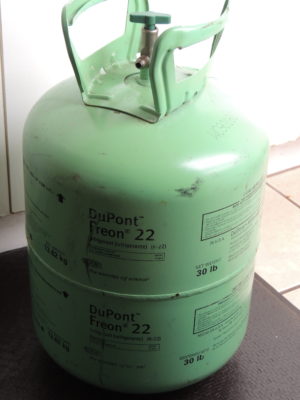
    R-22 is a hydrochlorofluorocarbon, or HCFC, refrigerant that HVAC manufacturers used in residential and commercial air-conditioning equipment for decades. Many people commonly refer to R-22 as Freon.

    Because HCFC refrigerants contribute to ozone depletion, the United States phased out R-22 under the Clean Air Act and its obligations under the Montreal Protocol.

    What Happened to R-22 Freon?

    The R-22 phaseout happened gradually rather than through a single immediate ban.

    • January 1, 2010: Manufacturers could no longer produce new air-conditioning and heat pump equipment designed to use newly produced R-22. Existing R-22 equipment could continue operating and receiving service.
    • January 1, 2015: The United States reduced HCFC consumption substantially as part of the continuing phaseout.
    • January 1, 2020: Production and import of new R-22 ended in the United States.

    Existing R-22 air conditioners and heat pumps did not suddenly become illegal on January 1, 2020. They can continue to operate.

    Can an Existing R-22 Air Conditioner Still Be Repaired?

    Yes. Existing R-22 equipment can still be repaired and serviced.

    The major difference is the source of the refrigerant. HVAC technicians can no longer rely on newly manufactured or newly imported R-22. Existing systems can instead use available supplies of previously produced, recovered, recycled, or reclaimed R-22.

    This distinction matters because the phaseout applies primarily to the production and import of R-22. It does not require homeowners to remove an operating R-22 air-conditioning system simply because it uses R-22.

    Why Was R-22 Phased Out?

    R-22 contains chlorine. When released into the atmosphere, HCFC refrigerants can contribute to depletion of the stratospheric ozone layer.

    The United States gradually reduced the production and consumption of HCFC refrigerants as part of its environmental commitments under the Montreal Protocol and requirements established through the Clean Air Act.

    Is Reclaimed R-22 Still Available?

    Yes. Reclaimed and previously produced R-22 can still be used to service existing equipment.

    However, the supply is no longer replenished through normal production of new R-22. Availability and price can therefore become important considerations when an older R-22 system develops a refrigerant leak or requires a major repair.

    Should You Repair or Replace an R-22 AC System?

    An R-22 system does not automatically need replacement just because it uses R-22. The condition of the equipment should drive that decision.

    Consider the age of the system, the type of failure, repair costs, refrigerant availability, efficiency, compressor condition, evaporator and condenser coil condition, and the expected remaining service life.

    A minor electrical repair on an otherwise reliable R-22 system may still make financial sense. A major refrigerant leak, failed compressor, or leaking coil on an older system may make replacement a better investment.

    Can You Convert an R-22 System to Another Refrigerant?

    Alternative refrigerants exist for some R-22 applications, but replacing R-22 is not as simple as adding a different refrigerant to the system.

    Refrigerants have different operating characteristics. A qualified HVAC technician must determine whether a retrofit refrigerant is appropriate for the specific equipment and what changes the system requires.

    Never mix refrigerants or assume that another refrigerant can serve as a direct replacement for R-22.

    What Does the R-22 Ban Mean for Homeowners?

    The short answer is that you can continue using an existing R-22 air conditioner or heat pump.

    If the system needs refrigerant, your HVAC contractor may still be able to service it with reclaimed or previously produced R-22. However, the cost of maintaining an aging R-22 system should become part of your repair-versus-replacement decision.

    If your system still operates correctly, you do not need to replace it solely because it contains R-22. If it develops an expensive refrigerant-related failure, compare the complete repair cost against replacing the equipment with a system designed for a currently available refrigerant.

    The Bottom Line on R-22 Freon

    New R-22 production and import ended in the United States in 2020, but existing R-22 HVAC systems can continue operating and receiving service. Reclaimed, recycled, and previously produced refrigerant can remain available for servicing existing equipment.

    Therefore, the question is no longer simply whether R-22 Freon is banned. If you own an R-22 system, the more useful question is whether repairing that specific system still makes financial sense compared with replacing it.